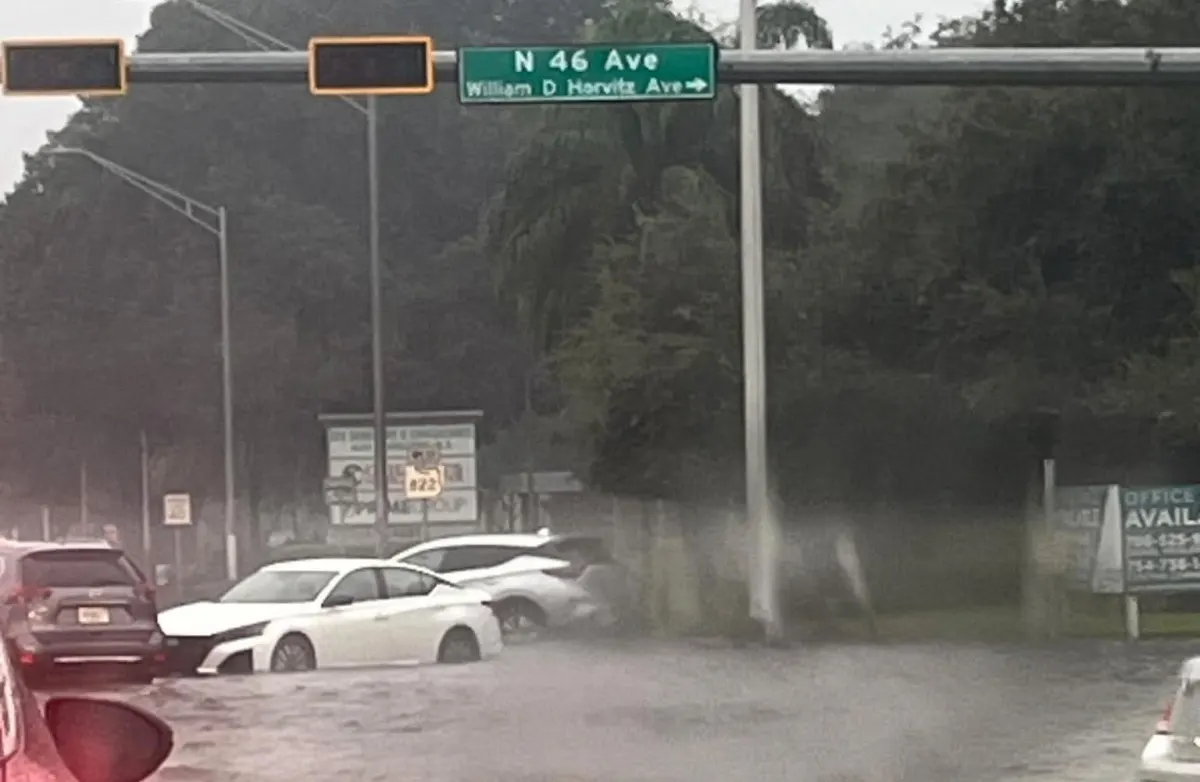
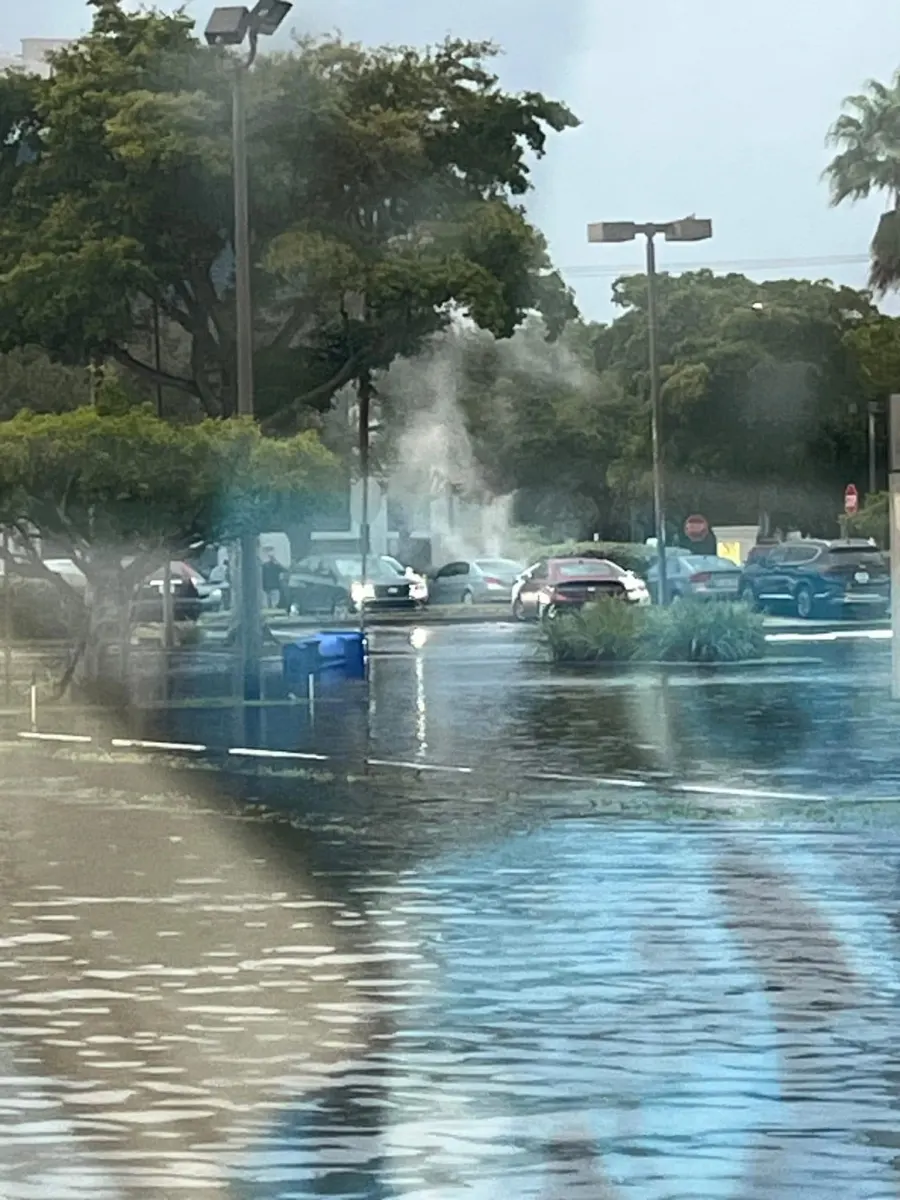
Our office is on Sheridan Street in Hollywood, and the photos in this guide were taken by our own staff a few steps from it. Many of the neighborhoods hit hardest this month are ours too. We hope you and your family are safe. If your home had storm damage before this month, our guide to hurricane damage claims in Hollywood covers Broward’s building rules and past storms. This guide explains what happened, how flood and homeowners coverage differ, how to file a flood claim, what public help is available, and which Florida deadlines apply.
- Photograph and video every room and damaged item before you clean up, and keep samples of damaged carpet and flooring (FEMA FloodSmart).
- Report the loss to your flood insurer and to your homeowners insurer, even if you are not sure which one applies. Write down each claim number and the date you reported.
- No flood policy? You may still have a homeowners claim for damage where the storm opened the roof or a wall, and Broward residents can apply for FEMA Individual Assistance (FEMA).
- If water came in on November 17 and 18 and again on November 25, record each event separately, with dates and photos.
- Broward County and the City of Hollywood declared states of emergency on November 18 (WLRN). The same day, the Governor extended Florida’s 2026 Fall Flooding emergency to 21 counties, including Broward, Miami-Dade and Monroe (Executive Order 26-232).
- On November 27, FEMA approved Individual Assistance for Broward and Brevard counties (FEMA).
- A homeowners policy without flood coverage must say so on its declarations page (Fla. Stat. § 627.7011(4)(b)). Flood damage is claimed under a separate NFIP or private flood policy (FEMA FloodSmart).
- An NFIP proof of loss is due within 60 days of the loss (Florida DFS).
- Notice of a homeowners claim is due within 1 year after the date of loss, and a supplemental claim within 18 months (Fla. Stat. § 627.70132(2)).
What happened in South Florida this November?
In an executive order signed November 18, Governor Ron DeSantis stated that on November 17, areas of Broward County, including Fort Lauderdale, Davie and Hollywood, saw more than 10 inches of rain within a twelve-hour period (Executive Order 26-232). Preliminary radar totals from the National Weather Service, reported by WLRN, showed more than 15 inches in West Hollywood, 12.16 inches in Plantation and 10.38 inches in northwest Hollywood (WLRN).
Broward County and the City of Hollywood declared states of emergency on the morning of November 18, and Hollywood asked residents to shelter in place and stay off the roads (WLRN). Sections of I-95 closed, and Broward and Miami-Dade public schools closed the next day (WLRN). Executive Order 26-232 extended the statewide 2026 Fall Flooding emergency to 21 counties, including Broward, Miami-Dade, Monroe and Palm Beach (Executive Order 26-232).
A second round arrived on November 25. CBS News Miami reported street flooding from the Keys to Pompano Beach as the peak of the king tides coincided with the morning’s heavy rain (CBS News Miami). Fort Lauderdale officials warned that an evening king tide could slow drainage (CBS News Miami). For many homes, that meant water came in twice in about a week. If that happened to you, record each event separately, with dates and photos.
The rain totals above are preliminary estimates and may be revised.
Does homeowners insurance cover flood damage?
Usually not. The Florida Department of Financial Services (DFS) states that “flood damage is not covered by your Homeowners’ insurance policy” (DFS). FEMA’s FloodSmart site says most homeowners and renters insurance does not cover flood damage (FEMA FloodSmart). Florida law requires a homeowners policy that does not include flood coverage to state on its declarations page, in bold type, that it does not cover flood damage (Fla. Stat. § 627.7011(4)(b)).
What counts as a flood matters. The NFIP and FEMA define flooding as a general and temporary condition of partial or complete inundation of two or more acres of normally dry land, or of two or more properties, at least one of which is yours (FEMA FloodSmart). Water that rose across a street or neighborhood and into homes is the kind of loss that definition describes.
Flood coverage comes from a separate policy: the National Flood Insurance Program (NFIP) or a private flood insurer. NFIP building policies cover up to $250,000 and contents policies up to $100,000, and building and contents coverage are typically purchased separately with separate deductibles (FEMA FloodSmart). Check your declarations pages to see which coverages you have.
When can a homeowners policy still pay for water damage?
Not every water loss during a storm is a flood. If wind, a falling tree or another covered cause first damaged the roof or a wall and rain came in through that opening, the interior damage may be a homeowners claim. Florida’s hurricane coverage statute describes this for hurricanes: coverage includes ensuing damage to the interior caused by rain if the direct force of the windstorm first damages the building and creates an opening through which the rain enters (Fla. Stat. § 627.4025(2)(a)). For a rainstorm that was not a hurricane, the answer turns on your policy’s own wording, so read its windstorm, water damage and exclusion sections.
Three points to check:
- Which deductible the insurer used. Florida’s hurricane deductible applies to storms the National Hurricane Center has declared a hurricane, during the hurricane period the statute defines (Fla. Stat. § 627.4025(2)(c)). If a hurricane deductible was applied to this month’s rain damage, ask which storm it was based on. Our hurricane deductible guide explains when that deductible applies.
- Water that backed up. DFS notes that some homeowners policies do not provide sewer backup coverage, and that a policy may exclude water backup from an outside sewer or drain (DFS). Look for any water backup endorsement on your declarations page.
- Both kinds of damage. When a home has both a storm opening and rising water, the two insurers may disagree about what caused which damage. Photos showing roof damage, broken windows and water lines help separate the causes. Our guide to flood versus wind damage coverage in Florida explains how these disputes work.
How do you file an NFIP flood claim?
FEMA’s FloodSmart site lists the steps (FEMA FloodSmart). In short:
- Report the flood and your loss to your flood insurance provider as soon as possible.
- Take photos and videos of flood-damaged belongings and property, and record the make, model and serial number of appliances and electronics.
- Keep samples of flood-damaged items such as carpet, flooring and curtains. Items that pose a health risk can be discarded after you document them.
- Work to limit mold. FloodSmart notes that standard NFIP policies do not cover mold damage.
- Meet with your flood adjuster, then start repairs.
Proof of loss. A proof of loss is your sworn statement of the value of the damage. DFS explains that it is required to be submitted to the NFIP or your flood insurance company within 60 days of the loss (Florida DFS). Ask your flood insurer in writing whether any extension applies to this event, and keep a copy of everything you send.
Advance payments. FEMA allows advance payments on flood claims during major flood events. Your provider may offer up to $5,000 without an adjuster’s visit, or up to $20,000 with authorization and documentation, and the advance is deducted from your final claim payment (FEMA FloodSmart).
Basements and code upgrades. NFIP coverage in basements is limited, and personal property kept in basements is among the items the policy does not protect (FEMA FloodSmart). If your community finds a building substantially damaged, meaning repairs will cost 50 percent or more of its pre-damage market value, eligible policyholders may receive up to $30,000 in Increased Cost of Compliance coverage toward elevation, demolition, relocation or floodproofing (FEMA).
Denials. FloodSmart says a denial letter is not the end of your claim. You can appeal if some or all of it is denied, or if you disagree with the amount (FEMA FloodSmart).
No flood policy yet? FEMA says there is typically a 30-day waiting period from the date of purchase before an NFIP policy takes effect (FEMA). A policy bought now will not cover this month’s flooding, but it can protect against the next event.
What help is available from FEMA and the state?
On November 27, FEMA announced a major disaster declaration for severe storms and flooding from November 16, 2026, and continuing (FEMA). Individual Assistance is available in Brevard and Broward counties and can include grants for temporary housing and home repairs, low-cost loans to cover uninsured property losses, and other programs (FEMA). Miami-Dade was not among the Individual Assistance counties in that announcement, so check DisasterAssistance.gov for the current list.
FEMA encourages residents to first file claims with their insurance providers, then apply at DisasterAssistance.gov, by calling 1-800-621-3362, or through the FEMA App (FEMA).
The Florida Division of Emergency Management lists a Multi-Agency Resource Center in the N.W. Conference Room of Dania Beach City Hall, 100 W Dania Beach Blvd, opening November 28 with hours of 7 a.m. to 7 p.m. (Florida Division of Emergency Management). Bring identification, proof of residence, insurance information and documentation of your losses (FDEM).
For insurance questions, the DFS Division of Consumer Services can be reached at 1-877-693-5236, and the NFIP at 877-336-2627 (Florida DFS).
What Florida deadlines apply to a homeowners claim?
For a claim under your homeowners policy, state law sets these deadlines:
- Claim notice. An initial or reopened claim must be noticed within 1 year after the date of loss, and a supplemental claim within 18 months (Fla. Stat. § 627.70132(2)).
- Insurer response. The insurer must acknowledge your claim communication within 7 calendar days, complete any physical inspection within 30 days after receiving proof-of-loss statements, and generally pay or deny the claim within 60 days after receiving notice (Fla. Stat. § 627.70131).
- Before a lawsuit. A written notice of intent to initiate litigation must be filed with DFS at least 10 business days before suit (Fla. Stat. § 627.70152).
- Lawsuit. An action for breach of a property insurance contract must be filed within five years from the date of loss (Fla. Stat. § 95.11(2)(e)).
An NFIP flood policy has its own requirements, such as the 60-day proof of loss, so track those separately. Your homeowners policy may also require prompt notice or a sworn proof of loss. Report as soon as you reasonably can.
Questions about a storm damage claim?
The consultation is free. Tell us what was damaged, when you reported it, and what your insurer has said so far. You can call (954) 395-2954, Monday to Thursday 8 a.m. to 6 p.m. and Friday 8 a.m. to 2:30 p.m., or send the contact form.
What if your insurer denies or underpays the claim?
Start with the paperwork. Florida law requires a residential property insurer to send you a copy of any detailed estimate within 7 days after its adjuster generates it, and to explain in writing if it pays less than that estimate (Fla. Stat. § 627.70131). Our guide to an underpaid property insurance claim in Florida covers depreciation, supplemental claims and appraisal.
Other paths include:
- DFS mediation. A free, nonbinding conference with a neutral mediator for most residential disputes of $500 or more after the deductible (Fla. Stat. § 627.7015).
- Appraisal. A contract process in most policies for disputes over the amount of the loss (Fla. Stat. § 627.7015(1)).
- Legal action. After the required presuit notice, a lawsuit for breach of the policy. Our guide to a denied home insurance claim in Florida walks through each step.
Consider speaking with an attorney if the insurer denies a homeowners claim because it says the water was flood, the offer is far below your contractor’s estimate, you receive a reservation of rights letter, or a deadline is approaching. Our property insurance claims page explains how we handle these disputes.
Frequently asked questions
Does homeowners insurance cover flooding from heavy rain in Florida?
Usually not. Florida DFS says flood damage is not covered by a homeowners policy, and Florida requires policies without flood coverage to say so on the declarations page. Rising water is usually claimed under a separate NFIP or private flood policy.
Can my homeowners policy cover rain that came through a damaged roof?
It may. If wind or another covered cause first opened the roof or a wall and rain entered through that opening, the interior damage may be a homeowners claim. The answer depends on your policy wording, so read its windstorm and water damage sections.
How long do I have to file an NFIP proof of loss?
Florida DFS explains that an NFIP proof of loss, your sworn statement of the damage, must be submitted to the NFIP or your flood insurer within 60 days of the loss. Ask your insurer in writing whether any extension applies.
Is FEMA assistance available for the November flooding?
In some counties. On November 27, FEMA approved a major disaster declaration with Individual Assistance in Broward and Brevard counties. FEMA asks residents to file with their insurer first, then apply at DisasterAssistance.gov, 1-800-621-3362, or the FEMA App.
Can I get an advance on a flood insurance claim?
FEMA allows advance payments during major flood events. Your provider may offer up to $5,000 without an adjuster’s visit, or up to $20,000 with authorization and documentation. The advance is deducted from your final claim payment.
How long do I have to report a homeowners claim in Florida?
Under Fla. Stat. § 627.70132, notice of an initial or reopened claim must be given within 1 year after the date of loss, and a supplemental claim within 18 months. Report as soon as you reasonably can.
How MAC Legal can help
MAC Legal P.A. is a plaintiff-side trial firm with its primary office at 4601 Sheridan Street in Hollywood, Florida. Michael A. Citron is licensed by The Florida Bar and represents homeowners, condominium and HOA boards, and businesses throughout Florida in disputes with their property insurers over denied, delayed and underpaid claims. We also work with licensed public adjusters when a claim needs legal help.
If this month’s storms damaged your property and your homeowners claim is not going the way it should, schedule a free consultation. We will review your policy and the insurer’s position and explain your options plainly.
This article provides general information about Florida law as of November 28, 2026, and is not legal advice. Reading it does not create an attorney-client relationship. Event details come from the Governor’s executive order, FEMA, the Florida Division of Emergency Management and news reports, are preliminary, and may change.
Sources
- Executive Order 26-232, Office of the Governor of Florida, November 18, 2026 (PDF)
- WLRN, “Residents urged to shelter in place after rain bomb drenches parts of Broward,” November 18, 2026
- CBS News Miami, South Florida flooding forecast and king tides, November 25, 2026
- CBS News Miami, South Florida flooding live updates
- FEMA, President Approves Major Disaster Declaration for Florida, November 27, 2026
- Florida Division of Emergency Management, 2026 Fall Flooding
- FEMA FloodSmart, Buy a Flood Insurance Policy
- FEMA FloodSmart, Start a Flood Insurance Claim
- FEMA, Waiting Period for Activating Flood Policy
- FEMA, Increased Cost of Compliance Coverage
- Florida Department of Financial Services, Flood Insurance Coverage FAQs
- Florida Department of Financial Services, Homeowners Insurance Overview
- Fla. Stat. § 627.7011, Florida Senate
- Fla. Stat. § 627.4025, Florida Senate
- Fla. Stat. § 627.70132, Florida Senate
- Fla. Stat. § 627.70131, Florida Senate
- Fla. Stat. § 627.70152, Florida Senate
- Fla. Stat. § 627.7015, Florida Senate
- Fla. Stat. § 95.11, Florida Senate